The SOC-CMM Model: How Do You Measure Your Company's Security Readiness?
A comprehensive security operations center framework for assessing SOC maturity
 Back
BackThe effectiveness of a SOC service doesn't depend only on the provider's technology — it also depends on the client's own IT security readiness. What conditions do you need to meet for the service to work effectively?

Security Operations Center as a Service (SOCaaS) is on the agenda at an increasing number of companies, as the volume and sophistication of cyberattacks keeps growing. A SOC service can monitor systems cost-effectively around the clock, detect suspicious events, and then alert on — or even respond to — incidents. That doesn’t mean the SOC solves every security problem on its own, though. A SOC never operates in isolation: its effectiveness is fundamentally shaped by the client organization’s own IT readiness and maturity — which can, in turn, be improved through joint work with the SOCaaS provider.
This article explores what cybersecurity principles and other conditions a company subscribing to a SOC service needs to meet for the service to work effectively.
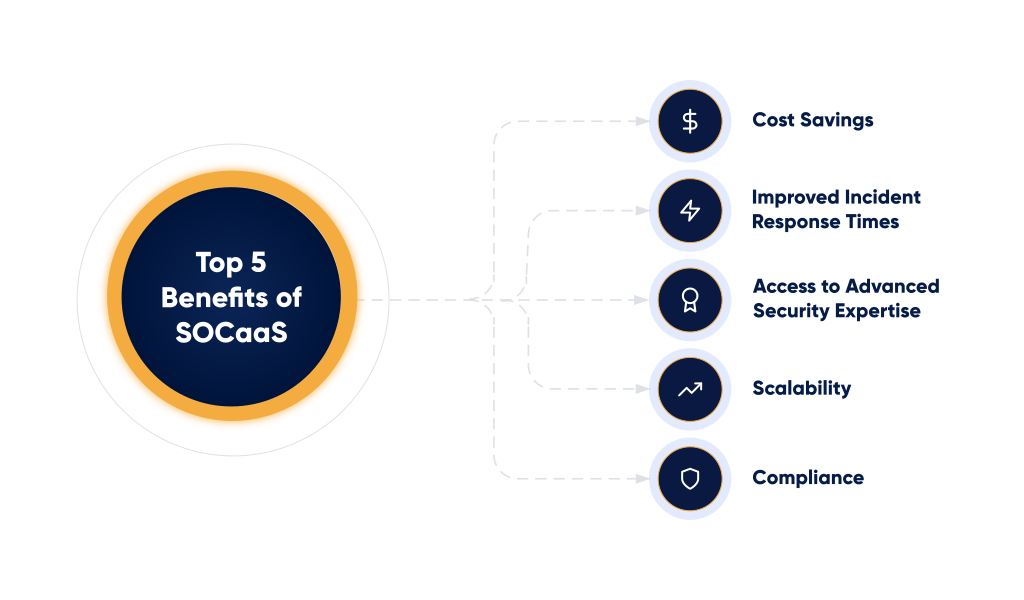
Even the most advanced SOC technology and the best-trained analysts can’t compensate for a protected environment that lacks basic security controls, up-to-date systems, or proper log-collection capabilities. It’s a bit like asking a security guard to protect a site at night that has no lighting and no cameras — detection capability drops off drastically in that kind of situation. SOCaaS, then, isn’t a magic wand — it’s a powerful magnifying glass and alarm system, and it only works well if there’s something to magnify and something to alarm on.
Client IT security readiness consists of several layers, each of which contributes to whether the SOC actually creates value. These include:
If any of the above is lacking, the SOC won’t get enough data to detect threats in time — or it will have to process too much noise, increasing the number of false positives.
These gaps are manageable, though: they can be addressed jointly, with expert support, on a project basis, building up to the minimum standard needed for the SOC service to operate effectively.
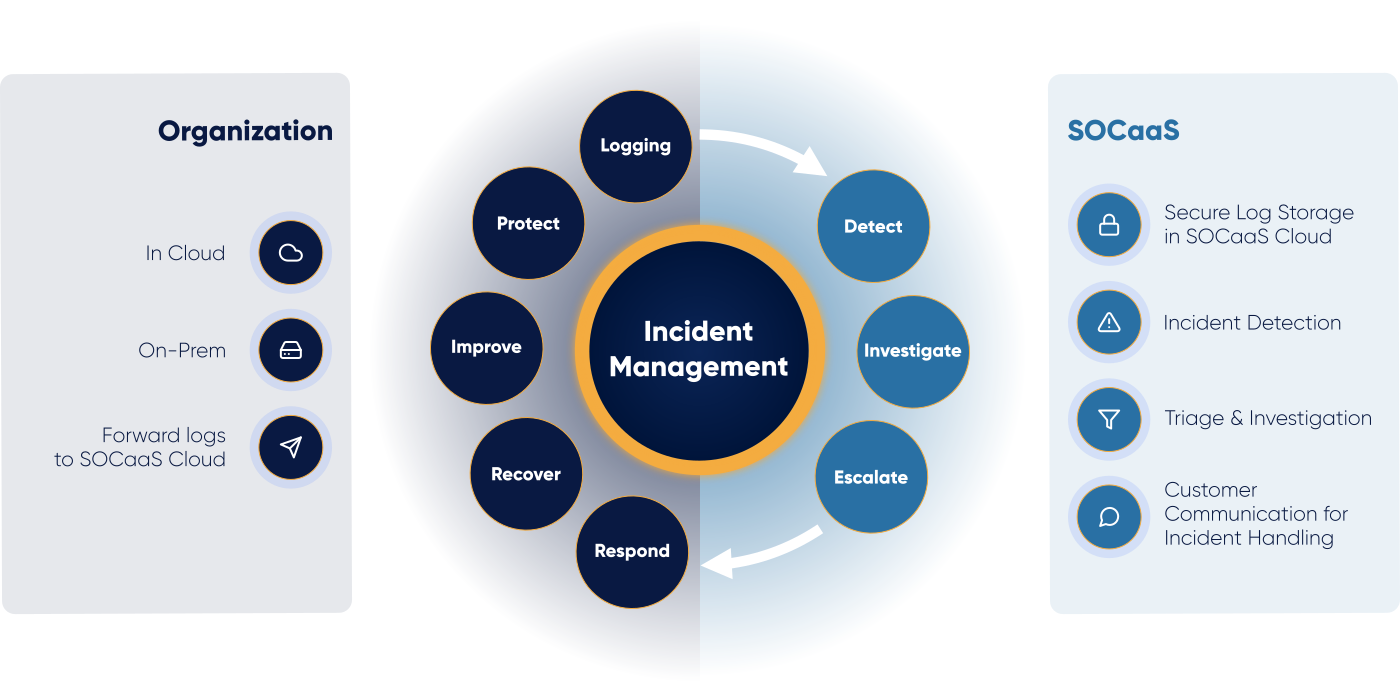
Effective SOC operation is, in other words, a shared responsibility: the provider brings the expertise and the technology, while the client provides the right environment and baseline conditions.
A fast, accurate detection is worthless if the company can’t execute the necessary follow-up steps. The SOC can raise the alarm, but the actual response is often the client’s responsibility — since only the client has visibility into its own business processes, and only the client can make the necessary decision on the appropriate next step, armed with the right information. For example:
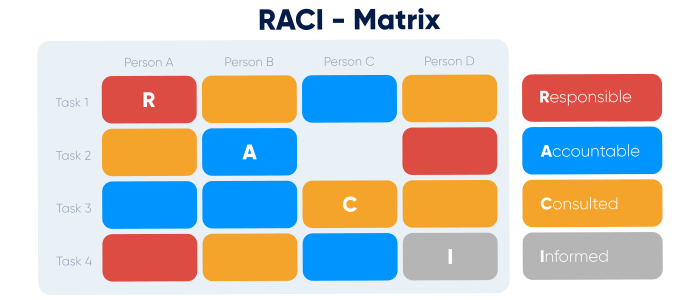
The key to a fast response, then, is clarity around roles and deadlines. It needs to be unambiguous within the organization who’s responsible for decisions in an incident, who carries out which task, who needs to be looped in, and who needs to be informed. It’s equally worthwhile to set SLA timeframes: triage time (e.g., 15–30 minutes), containment deadlines, the window for notifying business stakeholders, and recovery targets.
Without a predefined process, a designated incident response owner, and a well-drilled team, SOC alerts can easily get stuck somewhere in the organization. In a well-prepared organization, on the other hand, SOC alerts quickly turn into concrete action — which not only strengthens security but also protects business continuity.
SOCaaS can only operate effectively if the organization’s systems, processes, and rules are documented and transparent. This is not an administrative luxury - it is a baseline requirement. It is not enough to know what the monitored asset is; you also need to know what business process it serves. If SOC analysts do not know what business function a given server performs, or which business area a given application belongs to, it becomes harder to judge how critical a detected event actually is.
Documentation also helps keep communication between the SOC and the client running smoothly. A well-structured system description or process document speeds up incident handling and reduces delays caused by misunderstandings. Documentation, then, matters not only for compliance audits, but also for the SOC’s operational effectiveness.
Last but not least, organizational culture also plays a decisive role. The SOC doesn’t replace an internal IT security culture — it complements and strengthens it. At a company where IT security is seen as “just IT’s job,” it’s far harder to take SOC alerts seriously and respond quickly. Where security is treated as a shared responsibility, and business units understand why a fast response matters, the SOC creates real value. Security awareness, regular training, and management buy-in all contribute to the SOC becoming more than just a technology service — an integral part of the company’s security ecosystem.
The SOC-CMM Model - A Comprehensive Framework for Determining Enterprise SOC Maturity
See our full breakdown: The SOC-CMM Model: How Do You Measure Your Company’s Security Readiness?
The SOC-CMM model is a maturity model used for self-assessing the Security Operations Center (SOC). Its purpose is to provide insight into the SOC’s strengths and weaknesses. This allows the IT security leader to make informed decisions about which elements of the SOC need further attention and/or investment. Regularly assessing the SOC’s maturity and capabilities makes it possible to track progress over time.
The effectiveness of a SOCaaS service doesn’t depend solely on the provider’s competence and technology. Just as important is the client’s own IT readiness and consistent adherence to IT security principles: system updates, the quality of logging and monitoring, network architecture, access management, internal processes, organizational culture, and the availability and skill of in-house personnel. Without a well-prepared client environment, SOCaaS ends up being little more than an expensive alarm system — with the right readiness, though, it delivers a marked reduction in risk and real business stability.
The relationship between a SOC and its client is like a partnership: both sides carry their own responsibility. Companies that deliberately build their own security foundations get far more value out of the SOC service, and can achieve genuinely measurable business benefits.