 Back
BackThe SOC-CMM Model: How Do You Measure Your Company's Security Readiness?
A comprehensive security operations center framework for assessing SOC maturity
Many IT security leaders feel confident that their Security Operations Center (SOC) is running well: a modern SIEM, 24/7 coverage, experienced analysts. It’s usually only through a proper assessment that gaps come to light — some log sources aren’t sending data, incident handling isn’t properly documented, or threat hunting only happens ad hoc. These gaps can lead to serious cybersecurity and compliance problems, which is why leadership needs an objective view of the SOC’s actual state.
What Is SOC-CMM?
SOC-CMM is a comprehensive framework for determining the maturity of an enterprise SOC. It’s a capability and maturity assessment model built for internal SOC self-assessment. Its purpose is to give an objective picture of the SOC’s strengths and weaknesses, helping IT security leaders make informed decisions about which areas need investment. By regularly assessing the SOC, an organization can track its cybersecurity readiness over time and benchmark its operations against industry best practices.
Beyond reviewing the existing literature, the model’s creators studied how SOCs actually operate across multiple industries and interviewed practitioners from SOCs at different maturity levels. The final framework was built from those findings.
So the model isn’t built on theory — it comes from comparing how real SOCs actually work. That’s exactly what makes it valuable: the questions and criteria point to the factors that determine SOC effectiveness in practice. This is why SOC-CMM has become the de facto international standard for SOC assessment.
Purpose and Target Audience
The primary goal of SOC-CMM is to provide a comprehensive view of SOC operations and help identify:
- which areas are working well,
- where the gaps are,
- which processes need attention, and
- which direction the SOC should develop in.
The model is primarily aimed at SOC managers, IT security managers, SOC engineers, and external SOC consultants.
It’s not just an assessment tool — it’s also an excellent discussion starter. The questions give internal teams a structured way to have a deep professional conversation about how the SOC currently operates and how it should operate.
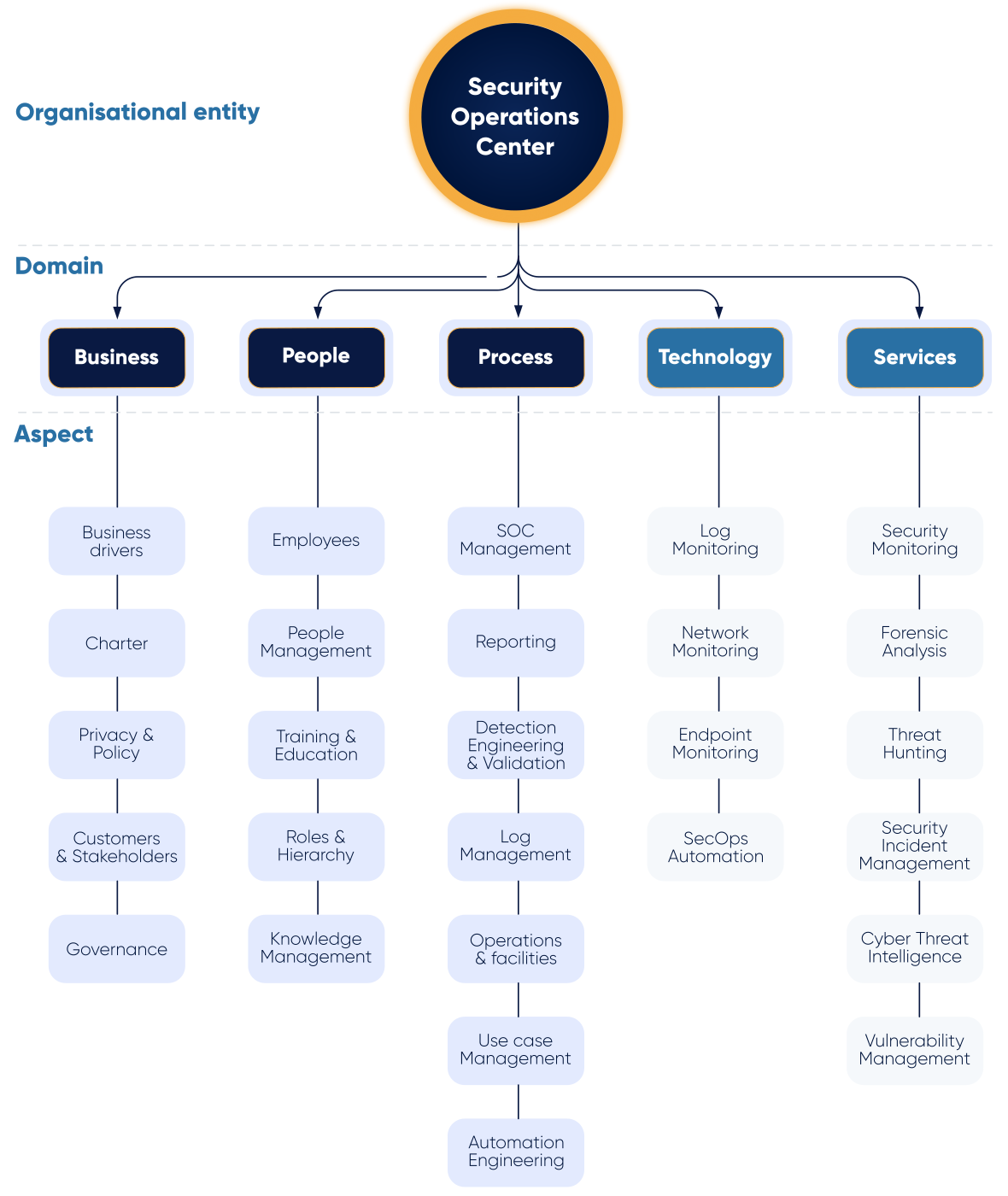
Five Domains, 27 Aspects
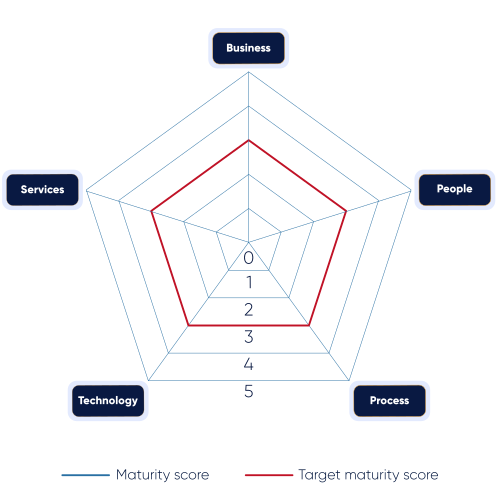
The model examines five major domains, broken down into 27 aspects in total, covering every essential element of SOC operations:
- Business - business alignment, governance, data protection rules
- People - roles, knowledge management, training, organizational structure
- Process - SOC management, log management, reporting
- Technology - log monitoring, network and endpoint monitoring, SecOps automation
- Services - security monitoring, incident management, forensic investigation, and more
All five domains receive a maturity rating, and two of them (Technology and Services) also receive a capability rating. This dual approach lets you evaluate the SOC not just on the maturity of its processes, but also on its technical capabilities.
How Do You Measure SOC Maturity?
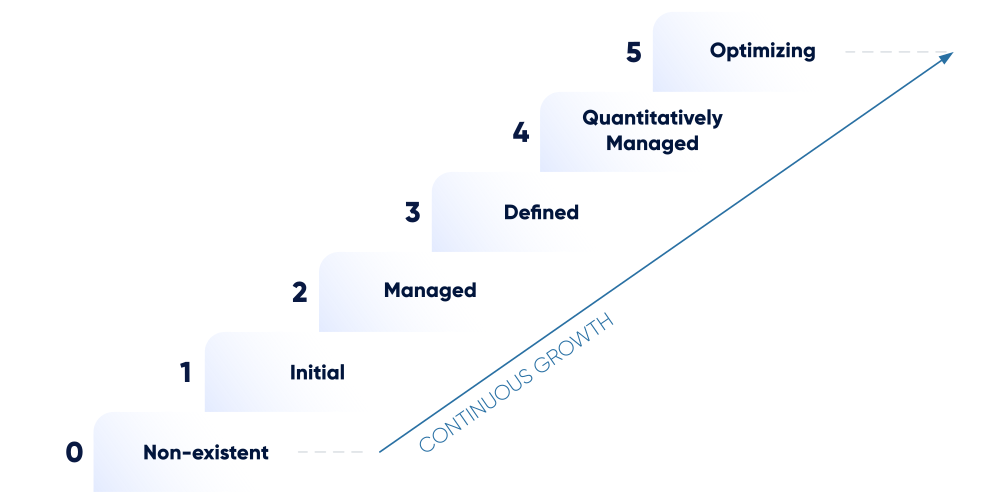
SOC-CMM uses maturity levels similar to CMMI (Capability Maturity Model Integration):
- 0 - Non-existent: no process, no operation
- 1 - Initial: ad hoc operation, no standardization
- 2 - Managed: basic processes exist, but are not consistent
- 3 - Defined: documented, consistent, standardized operation
- 4 - Quantitatively managed: metrics and KPIs in place, ongoing measurement
- 5 - Optimizing: continuous improvement, automation, proactive operation
Importantly, SOC-CMM is not built on prerequisites. You don’t need to “pass through” level 1 before certain elements of level 2 can be met. The model measures maturity on a continuous scale across all five domains — every element contributes individually to the final score, which makes it far more flexible than traditional maturity models.
Assessing Technical Capability
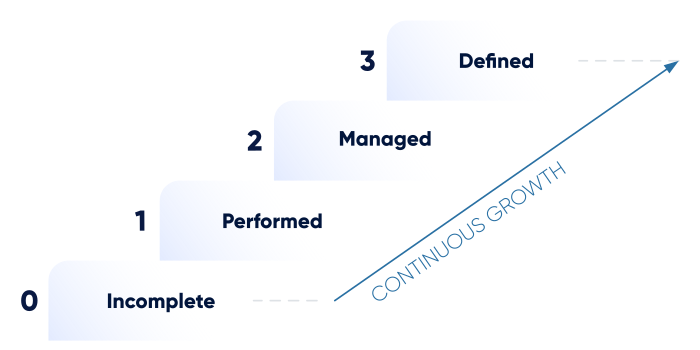
The capability assessment focuses specifically on technology and service capabilities. SOC-CMM uses four capability levels:
- 0 - Incomplete
- 1 - Performed
- 2 - Managed
- 3 - Defined
This capability assessment is especially useful when you want to develop the SOC’s technology stack, or when you want to benchmark your SOC against other organizations.
How Does the Self-Assessment Work?
SOC-CMM is a detailed, multi-tab Excel-based tool that is freely downloadable and walks users step by step through the entire self-assessment process.
The main steps are:
Defining the profile and scope
- How large is the SOC?
- What services does it provide?
- What technologies does it use?
- What is the purpose of the assessment?
Assessing the 27 aspects
Most questions are answered on a five-point scale tied to the maturity levels. SOC-CMM provides interpretation guidance and examples for every question to help with scoring.
Aggregating the results
The Results tab automatically aggregates the maturity level per domain, the capability levels, and the SOC's overall maturity profile. The model also produces a visual summary showing where the biggest gaps lie.
Why Is SOC-CMM Valuable for Your Company?
Objective, evidence-based self-assessment
SSOC-CMM isn't built on impressions or gut feelings — it's based on structured questions and measurable levels.
Helps prioritize investment
The model shows:
- where the critical gaps are,
- which areas need immediate attention, and
- where quick wins are available.
Supports NIS2 and DORA compliance
The maturity and capability levels map well onto various regulatory expectations.
A solid foundation for SOC modernization projects
Whether you're replacing a SIEM, introducing automation, or building new SOC services, SOC-CMM gives you a clear starting point.
Helps align SOC operations with business expectations
The Business domain questions are specifically designed for this.
Summary
SOC-CMM is a practical, comprehensive security operations center framework that helps companies understand how mature their SOC operations really are, and where to take them next. The model doesn’t just assess — it prompts reflection, raising questions that every modern SOC needs to be able to answer.
For anyone who takes their SOC seriously, SOC-CMM isn’t optional — it’s a baseline requirement.
Frequently Asked Questions
SOC-CMM is a freely available, Excel-based capability and maturity model used to self-assess a Security Operations Center across five domains — Business, People, Process, Technology, and Services — and 27 underlying aspects.
SOC managers, IT security managers, SOC engineers, and external SOC consultants who need an objective, evidence-based view of SOC strengths and gaps.
No, but it uses a similar 0–5 maturity scale (Non-existent to Optimizing). Unlike CMMI, SOC-CMM doesn’t require passing through lower levels before higher-level elements can be scored — maturity is measured continuously across each domain.
Looking to Partner on SOC Delivery?
If your organization serves clients who need SOC capability — and you’d rather partner than build — Andrews offers flexible partnership models, from white-label SOCaaS to joint go-to-market. Let’s explore what fits your business.
blog
Related reading



Contact